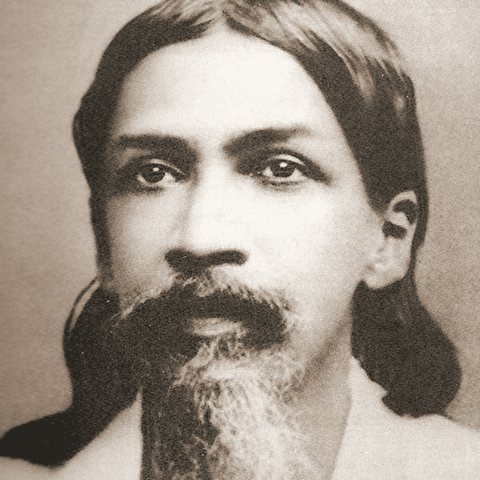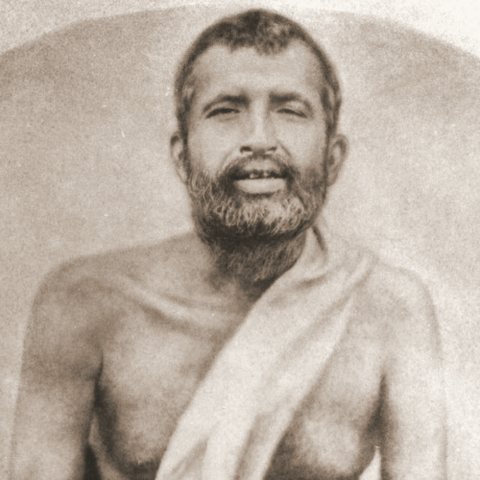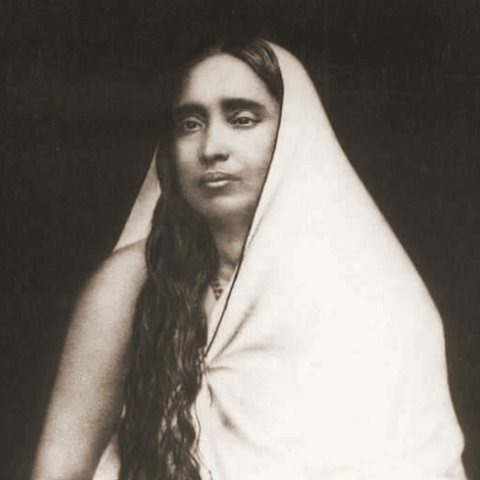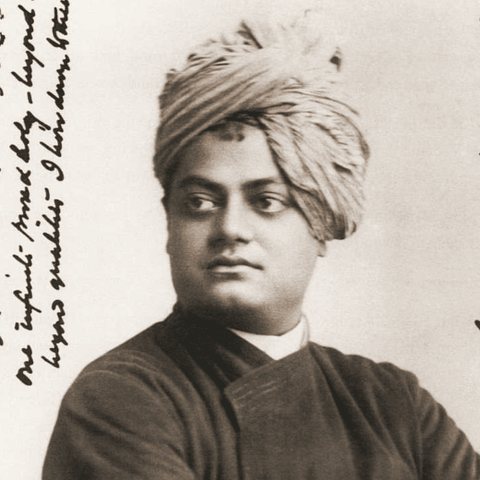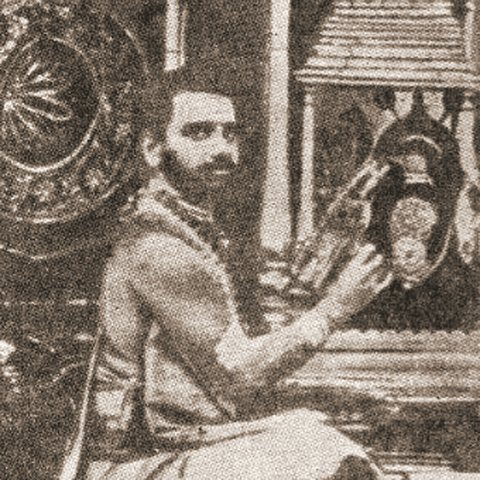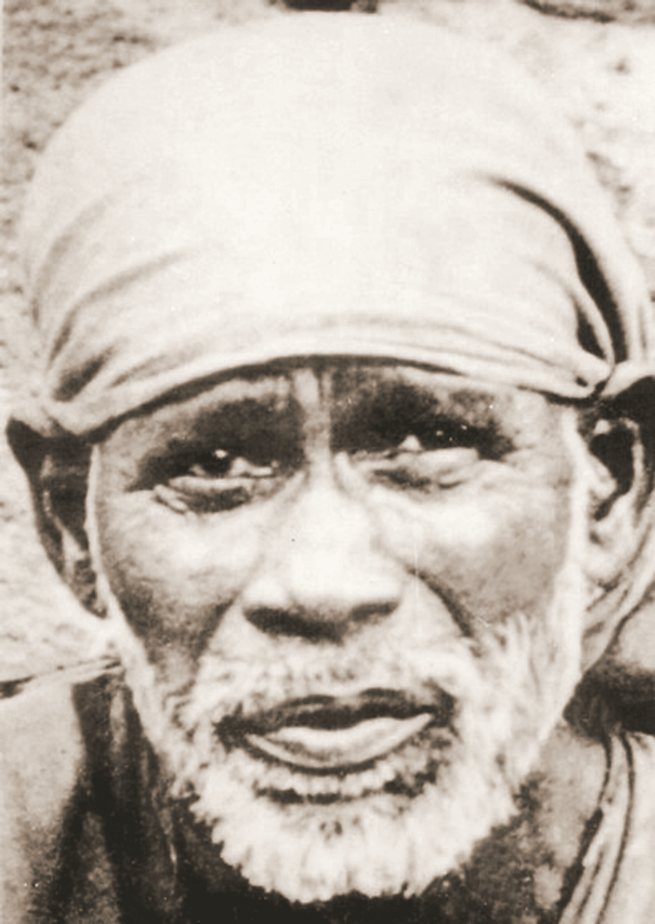
Sai Baba of Shirdi, before 1918. Public domain, via Wikimedia Commons.
Shirdi Sai Baba
The fakir of Shirdi — “Sabka Malik Ek”
Nobody knows where he was born, to whom, or into which religion, and he refused to say. He appeared in the village of Shirdi as a youth, sitting under a neem tree, left, came back with a wedding party, and stayed for sixty years in a ruined mosque he called Dwarkamai—a Hindu name for a Muslim building, which is as good a summary of his life as any. He begged his food, shared it, kept a fire that has not gone out since, gave its ash as medicine, and made no distinction between Hindu and Muslim, high and low, pious and disreputable.
He asked for dakshina, small sums, and gave it away the same day. And he asked, in the words of his biographer, for two coins: Shraddha and Saburi—faith and patience. Both are addressed, deliberately, to people who do not yet have them.
“Saburi is manliness in man, it removes all sins and afflictions, gets rid of calamities in various ways, and casts aside all fear, and ultimately gives you success.”
Shraddha and Saburi
Faith and patience were the two “pice” he asked of visitors. Both are better understood as disciplines than as feelings. Shraddha: act as though the outcome is held, before you can see that it is. Saburi: “I waited patiently and very long on my Guru and served him”—patience is duration under service, not passive waiting. He said it removes fear, and ultimately gives success.
Sabka Malik Ek
“Rama and Rahim are one and the same; there is not the slightest difference between them.” He did not argue this. He lived in a mosque, read from the Quran and the Gita, was buried in a Hindu house, and let Hindus and Muslims fight over his funeral rites. The unity was in practice before it was in precept.
The Guru as the sole doer
“Have faith and confidence in your Guru. Believe fully, that Guru is the sole Actor or Doer.” This is the Shirdi answer to anxiety: not reassurance about outcomes but the transfer of authorship. What is asked of you is remembrance, not control.
Reaping what was sown
“We have to reap now the fruit of what we sow in our past life, and there is no use in crying about it.” He told long stories—a snake and a frog carrying an enmity across lifetimes—to show that grievance outlives the people who hold it, and can be ended only by being named and dropped.
Saburi is manliness in man, it removes all sins and afflictions, gets rid of calamities in various ways, and casts aside all fear, and ultimately gives you success.
I waited patiently and very long on My Guru and served him. This Saburi will ferry you across the sea of this mundane existence.
Have faith and confidence in your Guru. Believe fully, that Guru is the sole Actor or Doer.
Make Me the sole object of your thoughts and actions; and you will, no doubt, attain Paramartha (the spiritual goal of life).
The (mother) tortoise is on one bank of the river, and her young ones are on the other side. She gives neither milk, nor warmth to them. Her mere glance gives them nutrition.
We have to reap now the fruit of what we sow (do) in our past life, and there is no use in crying about it.
Fie upon you, be ashamed, give up your hatred now and rest in peace.
If a man utters My name with love, I shall fulfill all his wishes, increase his devotion.
It is My special characteristic to free any person, who surrenders completely to Me.
All what you do is known to Me. I am the Inner Ruler of all and seated in their hearts.
Rama and Rahim are one and the same; there is not the slightest difference between them.
Though I be no more in flesh and blood, I shall ever protect My devotees.
The Eleven Assurances are a devotional distillation of Baba's sayings composed in Marathi by Mohaniraj Pandit and published by the Sansthan—not a list Baba himself dictated.
He who cometh to My Samadhi, his sorrow and suffering shall cease.
In whatever faith men worship Me, even so do I render to them.
Know that My Spirit is immortal. Know this for yourself.
Why fear when I am here?
Universally attributed to Baba and central to the Shirdi tradition, but not found in the Satcharitra chapters we checked. We mark it as traditional.
The two coins
- Name one situation in which you are waiting for an outcome you cannot control.
- Shraddha. For today, act as if the outcome is already held safely by something larger than you. Not believed—acted as if.
- Saburi. Do the next small piece of service the situation asks of you, and then the next. Patience is not waiting; it is continuing.
- Hand over the two coins again tomorrow. He asked for them every time.
Reading the Satcharitra
- Devotees traditionally read the fifty-one chapters over seven days, a saptah, beginning on a Thursday.
- The Marathi original is in the public domain; the Sansthan publishes it in many languages, including Tamil. Read a chapter a day if a week is too fast.
- Read it as what it is—a devotional life written by an eyewitness—and let the stories do their work.
A birth year of around 1838 is conventionally given; his origins were unknown even to his own devotees. He first appeared in Shirdi, in Ahmednagar district of what is now Maharashtra, as a youth of about sixteen dressed as a fakir, sitting beneath a neem tree—conventionally dated to the mid-1850s. He left, and returned a few years later with the wedding party of Chand Patil; a villager's greeting, “Ya Sai,” gave him the name he kept.
He took up residence in a ruined mosque, which he called Dwarkamai, and there kept the perpetual fire, the dhuni, whose ash, udi, he distributed to departing visitors. He begged his food daily and shared it. He asked for dakshina, usually small sums, and gave it away by evening. Through the later decades of his life a growing stream of devotees came to Shirdi, and the stories of his healings and knowledge of distant events spread across western India.
He died on 15 October 1918, the day of Vijayadashami, and was buried in a Hindu devotee's mansion, now the Samadhi Mandir. The record of his life is the Shri Sai Satcharitra, composed in Marathi verse by Govind Raghunath Dabholkar (“Hemadpant”), who knew him, and published in 1930.
Quotations are from the Shri Sai Satcharitra (Hemadpant's Marathi, 1930, in N. V. Gunaji's English adaptation, 1944) as hosted at saibaba.org, and from the official site of the Shree Saibaba Sansthan Trust, Shirdi. The Marathi original is in the public domain; the English adaptation is public domain in India but may remain in copyright elsewhere, so we quote briefly and link. Photographs of Baba taken between 1903 and 1918 are in the public domain; the tradition records that he asked that his image not be sold, and we honour that. This site is not affiliated with the Sansthan.