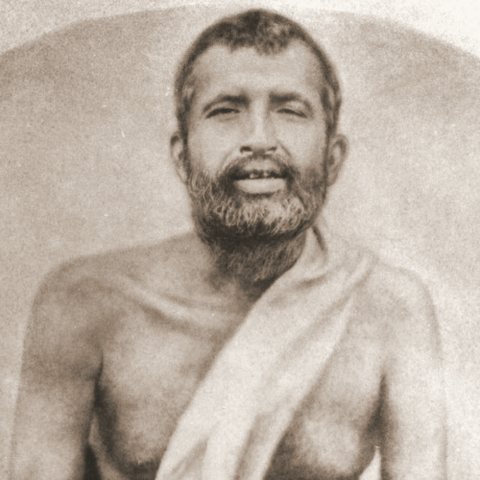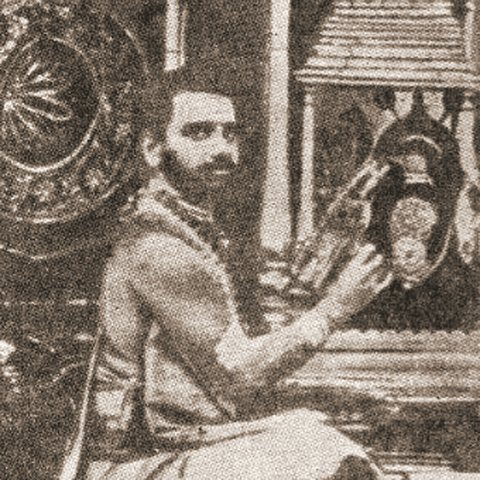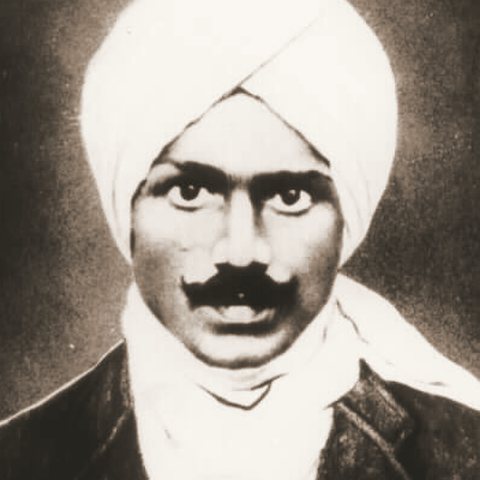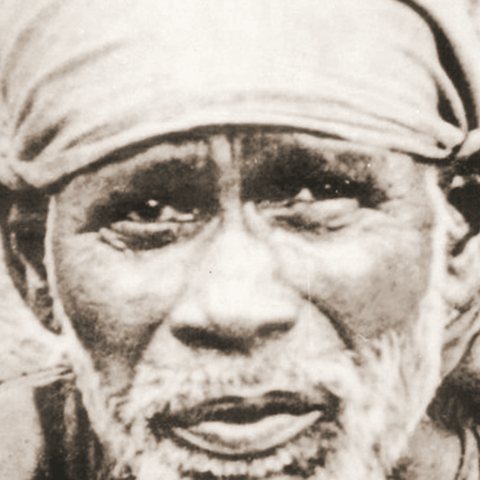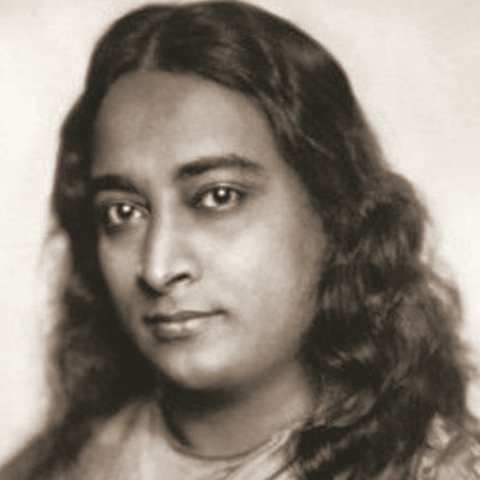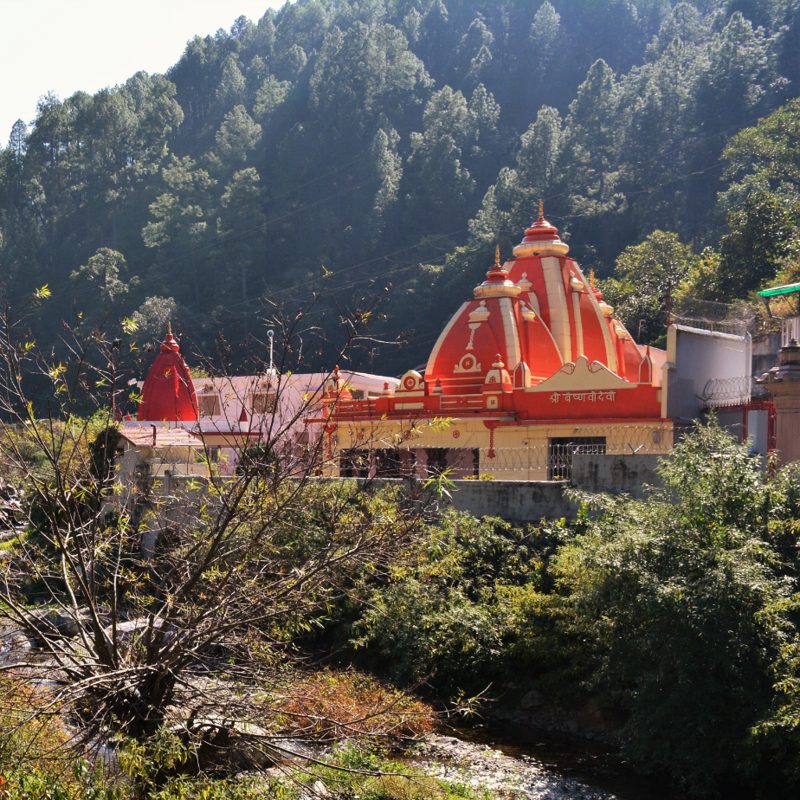
Kainchi Dham, the ashram he built near Nainital in 1964. Photo: Nickk Bisht, CC BY-SA 4.0, via Wikimedia Commons. (All photographs of Maharaj-ji are held in copyright by the Hanuman Foundation; we are seeking permission.)
Neem Karoli Baba
Maharaj-ji — who wrote nothing, and said “feed people”
There is a problem with this page, and we would rather state it than hide it. Maharaj-ji wrote nothing, gave no lectures, published no books, and discouraged people from talking about him. Everything presented anywhere as “the teachings of Neem Karoli Baba” is a second-hand recollection—usually in translation from Hindi, usually recorded years later, usually by Western devotees who met him only in the last years of his life. Ram Dass, who gathered two thousand such stories, wrote in the preface to his own book: “I have no way of ascertaining the authenticity of any single story.”
So what follows is not what he said. It is what people who loved him remember him saying. Read with that in mind, the material is extraordinary: a man wrapped in a plaid blanket who answered every spiritual question with food, who told fasting ascetics they were showing off, who said that serving people is better than a ritual bath in the Ganga, and whose whole teaching his devotees distil into four words—love everyone, serve everyone, remember God, tell the truth.
“Love everyone and tell the truth.”
Love everyone, serve everyone, remember God
This four-part formula is the ashram's own authorised summary of the teaching, not a page-citable quotation; the narrower “Love everyone and tell the truth” is recorded directly. Either way it is the whole of it. There is no path here, no stages, no technique—only a direction, and the insistence that it be walked with other people rather than away from them.
Feed people
Asked how to reach enlightenment, he is remembered as answering, “Feed people.” His ashrams were kitchens before they were temples. He told a woman worried that she could not do sadhana while running a household that cooking with her own hands and feeding people “is the highest sadhana for the householder.”
Against showing off
He had no patience for ritual display. To a fasting ascetic: “Oh, you are just showing off. What is the use of fasting and all these rituals?” To someone wanting to bathe in the Ganga: “Take your bath here. Everywhere is the Ganga.” And, most quoted: “Serving people is better than a ritual bath in the Ganga.”
Any mantra, all religions
He endorsed whatever practice a person already had—“Use any mantra—use it, use it”—and treated the Hanuman Chalisa as forty lines of maha-mantra. He said all religions lead to God and spoke of Christ with unusual warmth: “No one believes in Christ, but I do.”
Anger, a little at a time
His treatment of anger is the most humane in this library. He did not demand its abolition: “It's very difficult to overcome anger. Some of the greatest saints don't overcome anger.” He asked for increments: “If you give up a little anger each day, I will help you.” And he set the boundary that matters: do what you must with another person, “but never put him out of your heart.”
Love everyone and tell the truth.
Do what you do with another person, but never put him out of your heart.
You must polish the mirror free of anger to see God. If you give up a little anger each day, I will help you.
It's very difficult to overcome anger. Some of the greatest saints don't overcome anger.
You get wisdom from suffering. You are alone with God when you are sick, in the cremation ground or hospital. You call on God when you suffer.
Sub Ishwar hai. (It's all God.)
Smallpox will be eradicated. This is God's gift to mankind because of the hard work of dedicated medical scientists.
Said to Larry Brilliant, who went on to work in the WHO smallpox eradication programme. We include it as the tradition's own warrant that spiritual help and medical care are not rivals.
I am here and I am in America. Whoever remembers me, I go to.
You always bother about this and that! Why are you bothering?
The best service you can do is to keep your thoughts on God.
The mind can't concentrate. Use any mantra—use it, use it.
Serving people is better than a ritual bath in the Ganga.
All religions are the same. They all lead to God.
See no difference, see all the same.
The whole universe is your home. All are your family.
Ma, I am with you in the house all the time. You are not away from me. The work that you are doing—cooking with your own hands and feeding the people—that is the highest sadhana for the householder.
Serve the poor and remember God. You become one with Christ.
People don't know—every line of the Hanuman Chalisa is a maha mantra.
All action is prayer. All trees are desire-fulfilling. All water is Ganga. All land is Varanasi. Love everything.
I do not know anything. I just know how to change hearts.
Sub Ek (All one)!
When anyone thinks of me, I am with him.
Feed someone
- This week, cook or buy a meal for someone who is not expecting it—a neighbour, a colleague, a person on the street, a relative you have been avoiding.
- Serve it with your own hands if you can. Sit with them if they will let you.
- Do not attach a lesson to it. He never did. The feeding is the whole teaching.
Hanuman Chalisa
- Tulsidas's forty verses to Hanuman, in Awadhi, are long out of copyright and easy to find; the Taos ashram publishes the text and a translation.
- Recite or sing it once, daily, at whatever speed you can manage—alone, with family, or along with a recording.
- He said every line was a maha-mantra. Do not worry about understanding it first. Understanding comes from repetition, not before it.
A little less anger, each day
- Do not resolve to stop being angry. He said the greatest saints could not.
- Resolve instead to give up a little today—one retort not made, one grudge held five minutes less.
- When you must confront someone, do it; but keep them in your heart while you do. That is the only rule he gave.
His birth date and early life are genuinely uncertain, and any page that gives a confident date is inventing one. He never spoke of his origins. What is reasonably attested: he was born Lakshman Narayan Sharma, around 1900, to a Brahmin family in Akbarpur in what is now Uttar Pradesh; married at about eleven; left home around 1911 to wander as a sadhu; returned at his father's insistence to live as a householder and had three children; and then resumed a wandering life under a bewildering number of local names. The one that stuck came from a village where he stayed, and from a story about a train that would not move until he was allowed to board.
More than a hundred temples were built in his name during his lifetime. The best known is Kainchi Dham near Nainital, built in 1964, and the Vrindavan ashram. He was widely called the “Miracle Baba,” and the miracle stories—bilocation, knowledge of strangers' lives, food multiplied at feasts—are central to how he is remembered.
From about 1967 Westerners began reaching him, among them Richard Alpert, whom he named Ram Dass, and later Krishna Das, Jai Uttal, Larry Brilliant and Daniel Goleman. Their accounts are why he is known outside India at all. He died in Vrindavan in the early hours of 11 September 1973; his last reported words were “Jaya Jagadish Hare.”
Maharaj-ji left no writings. Every saying here is a devotee's recollection, and we mark them all as reported rather than verified. Sources are the sections of Ram Dass's Miracle of Love that the Hanuman Foundation itself publishes free online, and the pages of the Neem Karoli Baba Ashram, Taos, and the Love Serve Remember Foundation. Those texts and all photographs of Maharaj-ji are in copyright; we quote briefly with attribution and link to the rights holders. Many sayings circulating online under his name cannot be traced to any source; we do not use them.